
Are Cordless Sheep Clippers Worth It for Your Farm?
Shearing day comes round fast, and the right kit makes the job far easier. Cordless sheep clippers let you work anywhere on the farm. There is no cable to trip over and no generator to hire. At Hoof Shop, we supply clippers, combs and cutters to farmers, shearers and smallholders across Northern Ireland, Ireland and the rest of the UK. This guide explains how to pick a machine, how to shear a sheep safely, and how to keep your clippers running for years.
Why farmers choose cordless sheep clippers
Most sheep are handled away from the yard at some point. You might be dagging ewes in a field pen or tidying a tup before a sale. Running a lead out to those places is slow and risky.
Cordless sheep clippers solve that problem. You pick the machine up, switch it on and start work. Hill farmers, part-time shepherds and hobby flock keepers gain the most from this.
There is a second benefit. A trailing cable pulls against your hand all day. Without one, your wrist stays in a more natural position. Many shearers find the job less tiring as a result.
Cordless machines also suit quiet handling. You can shear in a small pen beside the rest of the flock, so sheep stay calm and settled. Calm sheep sit still, which means fewer nicks and a cleaner fleece.
What clippers are the best for sheep shearing?
The answer depends on your flock size and the job in front of you.
For a few hundred ewes sheared in one go, a mains machine or a flexible shaft plant still leads. These machines run all day without a break and pull hard through heavy fleece.
For small flocks, mixed jobs and follow-up work, a cordless machine usually wins. Think dagging, crutching, belly wool, show preparation and pet sheep. Our range of sheep clippers covers both ends of that scale.
When you compare models, look at four things:
- Motor strength. A weak motor stalls in dense or dirty wool.
- Weight and balance. You hold the machine for hours, so grams matter.
- Comb and cutter fit. Standard fittings are easier and cheaper to replace.
- Parts and servicing. Ask if tension springs, filters and blades stay in stock.
Price alone is a poor guide. A cheap machine with no spare parts costs more over three seasons.
Battery life and charging
Run time varies by model, by wool condition and by how hard you push the machine. Wet, sandy or matted fleece drains a battery faster than clean wool.
Plan around that. Charge every battery the night before shearing. Keep a spare on charge in the shed while the first one is in use. Swapping batteries takes seconds and keeps the flock moving.
Store batteries somewhere dry and cool. Heat and damp shorten their life. If you only shear once a year, top the battery up every few months rather than leaving it flat.
Talk to us before you buy if you plan to shear a full flock on battery power. We will tell you plainly if a corded setup suits you better.
Blades matter more than horsepower
A sharp comb and cutter do most of the work. Blunt blades drag, pull the skin and leave ridges in the fleece. They also force the motor to work harder, which flattens your battery.
Keep at least three sharpened sets for a day’s shearing. Change them as soon as the machine starts to pull. Send blades away for professional sharpening rather than grinding them yourself.
Comb choice changes the finish. Fine combs cut close and suit warm weather. Cover combs leave more wool on the sheep, which protects animals turned out in cold or wet spells.
How to shear a sheep safely
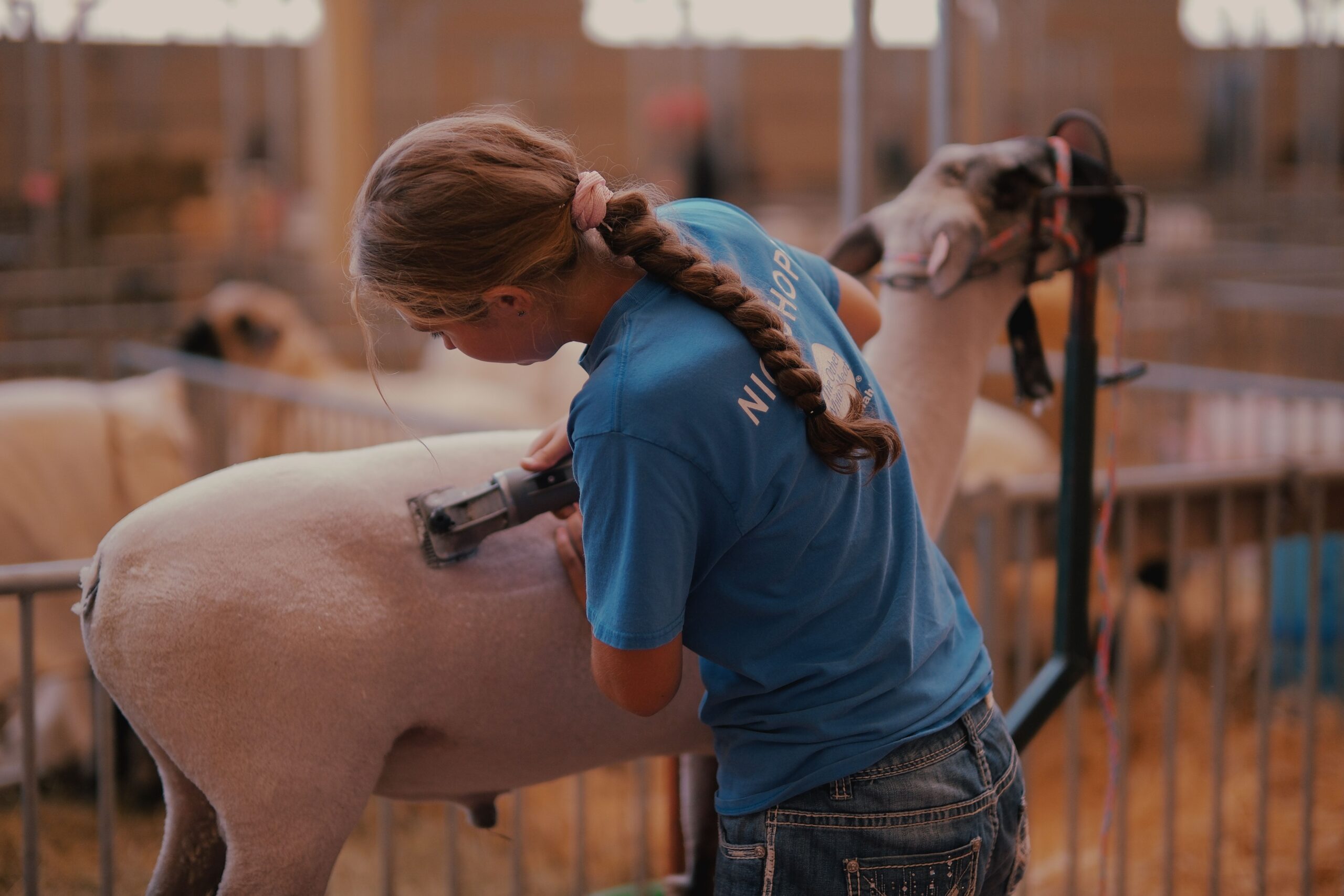
How to shear a sheep is a skill best learned in person. The steps below give you the shape of the job.
- Shear dry sheep only. Damp wool clogs the comb and spoils the fleece. Bring sheep indoors the night before if rain is likely.
- Set up a clean, level area. A board or clean concrete keeps the fleece free of muck and stones.
- Sit the sheep on its rump. A settled sheep sits back against your legs and stops struggling.
- Start with the belly. Remove belly wool and daggings first, then throw them aside.
- Work in long blows. Keep the comb flat against the skin and move in steady strokes.
- Watch the teats and pizzle. Slow down over folds of skin and around the head.
- Check the sheep afterwards. Treat any nicks and record anything that needs the vet.
Take a training course before you shear a whole flock. British Wool runs shearing courses across the UK, and their shearing information pages explain what each level covers. A two-day course saves your back and protects your sheep.
Timing matters too. Speak to your vet about the right point in the year for your ewes, especially around lambing and in cold snaps.
Looking after your clippers
Wool grease and dust build up inside the head very quickly. Ten minutes of care after each session adds years to a machine.
Brush loose wool out of the head and cooling vents. Oil the comb and cutter during use, not only at the end. Slacken the tension nut before you put the machine away. Wipe the body down and store it in its case, away from damp.
Check the drive and any moving parts at the start of each season. Order replacement blades early, because everyone wants them in May and June.
Keep a small kit with the clippers: oil, a stiff brush, a screwdriver and spare blades. Pack it once and leave it in the case. That way nothing holds you up on the day.
Buying cordless sheep clippers from Hoof Shop
We are a family-run business based in Banbridge, County Down. We have supplied hoof care and animal health equipment since 2017, and we send orders across Ireland, the UK and further afield.
Our full sheep equipment range sits alongside our hoof trimming and handling kit, so you can order everything in one go.
Not sure which machine fits your flock? Get in touch with the Hoof Shop team. Tell us how many sheep you shear and what breed they are. We will point you towards the clippers, combs and cutters that match the job, and we will say so if a simpler option does the same work for less.